More Than Horses:
The Science and Therapeutic Power Behind Equine-Assisted Psychotherapy.
We often hear the question:
"Why horses?"
When Therapy Moves Beyond Conversation.
Equine-Assisted Psychotherapy is not about horses having special powers or replacing traditional therapy. It is about recognizing that healing often happens through relationships, experiences, and environments that help us feel safe enough to explore, grow, and connect.
For thousands of years, humans and horses have lived and worked alongside one another, forming relationships built on trust, communication, and mutual awareness. Today, we are beginning to better understand why these relationships can be so impactful within the therapeutic process.
As highly social and relational animals, horses offer unique opportunities to explore patterns of communication, attachment, boundaries, emotional regulation, and connection in real time.
When combined with evidence-based psychotherapy and the guidance of a trained mental health professional, these experiences can create powerful moments of insight and growth.
The science behind Equine-Assisted Psychotherapy continues to evolve, but what research consistently points toward is something we already know to be true in mental health:
Healing happens in relationships.
Why Horses?
-
Long before we learn to speak, solve problems, or understand the world around us, our brains are learning one important lesson:
"Am I safe?"
From the moment we are born, our brains and nervous systems develop through relationships. Thousands of everyday interactions, like being comforted when we cry, making eye contact with a caregiver, hearing a calm voice, feeling protected, or having our needs met, teach our nervous system whether the world is safe, whether our emotions matter, and whether we can rely on others for support. These early experiences become the blueprint our brains use to understand future relationships.
Research consistently shows that this doesn't stop in childhood. Decades of psychotherapy research have found that one of the strongest predictors of successful therapy is the quality of the therapeutic relationship itself. Feeling safe, understood, accepted, and connected creates the conditions where growth and healing become possible. Yet, this is also what makes therapy so complex.
Many people come to therapy because they have been hurt in relationships. Abuse, neglect, betrayal, rejection, or chronic inconsistency can teach the nervous system that connection is unsafe. Then, in therapy, we ask that same person to build trust with another human being — the very place where many of their wounds began. For some people, that feels overwhelming.
This is where Equine-Assisted Psychotherapy offers something different.
Rather than relying only on the relationship between therapist and client, Equine-Assisted Psychotherapy creates a three-way therapeutic relationship between the client, therapist, and horse. This additional relationship often changes the experience of therapy in meaningful ways.
Horses don't ask clients to explain themselves, defend themselves, or find the right words. They simply respond to what is happening in the present moment.
As deeply social herd animals, horses have evolved to pay extraordinary attention to the emotional and physical state of those around them. Research has shown they recognize familiar individuals, remember previous interactions, distinguish human emotional expressions, and build trust through consistency and repeated positive experiences rather than through words alone.
Instead of immediately asking clients to practice vulnerability with another person, the horse provides opportunities to first experience curiosity, trust, connection, boundaries, and emotional safety in a relationship that feels different. The therapist then helps clients make meaning of those experiences and connect them back to their everyday lives.
The horse offers immediate, honest, nonjudgmental feedback while the therapist provides safety, reflection, and clinical guidance. Together, these relationships create opportunities for clients to experience trust, connection, and healing in ways that conversation alone sometimes cannot.
Before we ever learned to think through relationships, we first experienced them. Healing often begins in much the same way.
-
For many years, trauma was thought of as something that happened to a person.
Today, neuroscience tells us something much more important:
Trauma is not the event. Trauma is what happens inside the nervous system because of the event.
Two people can experience the same situation and walk away with very different nervous system responses. Trauma isn't determined by the event alone. Instead, it's shaped by how the brain and body process, store, and adapt to that experience.
The human brain is remarkably good at keeping us alive. After overwhelming experiences, it begins organizing itself around protection. Rather than simply remembering what happened, the nervous system learns to anticipate danger before we're even consciously aware of it. This is why someone may logically know they are safe while their body continues reacting as though the threat still exists.
These adaptations can show up in many different ways. Some people become constantly alert to potential danger. Others disconnect from their emotions, struggle to trust, avoid vulnerability, or find themselves feeling stuck in patterns of fight, flight, freeze, or fawn. These responses are not signs of weakness or failure; they are signs of a nervous system that learned how to survive.
This understanding has changed the way we think about trauma treatment.
If trauma changes the nervous system, healing must involve the nervous system as well.
Talking about a traumatic experience can be incredibly important, but insight alone doesn't always create change. Lasting healing happens when the nervous system begins having new experiences that challenge its old expectations about the world.
This is one of the reasons Equine-Assisted Psychotherapy can be such a powerful approach to trauma treatment.
Rather than only discussing concepts like trust, boundaries, or regulation, clients have the opportunity to experience them. Every interaction with a horse provides real-time feedback, inviting the nervous system to notice something different. A client who expects uncertainty may experience consistency. Someone who struggles to trust may discover that trust develops gradually through clear communication and repeated positive interactions. Someone who has spent years disconnected from their body may begin noticing their breathing, posture, tension, and emotional state in ways they never have before.
These moments may seem simple, but neuroscience tells us they matter.
The brain changes through experience. Each new experience of safety, connection, or successful regulation becomes new information for the nervous system. Over time, these experiences help build new neural pathways that support flexibility, resilience, and healthier ways of responding to the world.
Healing isn't about erasing the past. It's about helping the nervous system discover that the future doesn't have to look like it.
-
Human beings are biologically wired for connection.
From infancy onward, we learn what safety feels like through relationships. Before we can calm ourselves independently, we rely on another person's steady voice, facial expressions, touch, and presence to help regulate our emotions. This process is known as co-regulation, and it remains an essential part of emotional well-being throughout life.
Equine-Assisted Psychotherapy adds another dimension to this process.
Unlike many animals, horses don't survive because they are stronger than predators; they survive because they stay connected to one another. A single horse noticing a change in the environment can influence the behavior of the entire herd within seconds. In many ways, a herd functions like one interconnected nervous system. Each horse contributes information, and every member continuously adjusts in response. While humans are far more complex, our nervous systems also continuously exchange information with the people around us, often without us realizing it.
Because of this, horses have evolved an extraordinary awareness of nonverbal communication. They notice subtle changes in breathing, posture, movement, muscle tension, facial expressions, and emotional expression long before words are spoken.
Emerging research has also found that during calm horse-human interactions, people and horses can show signs of physiological synchronization, including changes in heart rate variability (HRV), a measure associated with the nervous system's ability to adapt and recover from stress. While researchers continue to explore exactly how this occurs, these findings reinforce what horse professionals have observed for years: nervous systems communicate long before words do.
The goal isn't for the horse to regulate us.
Rather, the horse's awareness helps us become more aware of ourselves. Together with the therapist, these real-time interactions create opportunities to notice our internal state, practice slowing down, and experience regulation in the present moment.
Co-regulation isn't about becoming dependent on the horse. It's about experiencing enough moments of safety, awareness, and connection that your own nervous system begins to recognize the path back to regulation.
-
Connection isn't just important for horses, it's essential for survival.
Horses evolved as prey animals, meaning their greatest protection has never been strength or speed, but the herd. They don't simply live alongside one another; they form lasting social bonds, recognize individual herd members, remember previous interactions, and develop preferred companions. Like people, trust within a herd is built through consistency, predictability, and repeated positive experiences.
Within a herd, every horse plays an important role. A single horse noticing a change in the environment can influence the behavior of the entire group within seconds. In many ways, a herd functions like one interconnected nervous system, with each horse constantly sharing information and adjusting in response. Their survival has always depended on awareness, communication, and staying connected to one another.
Humans aren't all that different.
Our brains are also wired for connection. Feeling accepted, understood, and emotionally safe is a biological need. The relationships we experience throughout our lives shape how we trust, communicate, regulate our emotions, and develop a sense of belonging.
It's no surprise that many of the struggles that bring people to therapy involve relationships:
Trusting others after being hurt
Setting healthy boundaries
Feeling seen, understood, and accepted
Navigating conflict
Building confidence, self-worth, and belonging
Working alongside the herd brings these patterns into the present moment.
Rather than responding to our explanations or the stories we tell about ourselves, horses respond to the relationship unfolding in front of them. This creates opportunities to notice patterns that are often difficult to recognize in everyday life.
How do I approach connection?
What happens when trust isn't immediate?
How do I communicate my needs?
What do I do when I feel uncertain?
How do I repair after moments of disconnection?
Unlike traditional conversation, these questions don't remain abstract. They become lived experiences.
The herd becomes more than part of the environment; it becomes a living example of the kinds of relationships our nervous systems were designed to experience.
Clients witness relationships built on trust, clear communication, mutual awareness, flexible leadership, and the ability to reconnect after moments of tension. These aren't just concepts to discuss, they’re dynamics that can be observed, experienced, and reflected on in real time.
This is one of the things that makes Equine-Assisted Psychotherapy unique. Clients have the opportunity to experience these concepts alongside the herd, process them with the support of a therapist, and carry those insights into the relationships that matter most.
The Power of Experiential Learning.
Sometimes we know something logically but struggle to live it.
"I know I need boundaries."
"I know I need to trust people."
"I know I need to slow down."
Experiential therapies create opportunities to move from insight into experience.
Instead of only talking about these concepts, individuals can practice them.
These experiences feel more meaningful, memorable, and are easier to apply to everyday life.
More Than a Therapy Session.
Equine-Assisted Psychotherapy is about creating opportunities to experience ourselves and our relationships differently. It is about noticing the ways we respond to stress, understanding what safety feels like in our bodies, practicing trust and boundaries, and discovering new ways of connecting with ourselves and others.
Sometimes healing begins with words. Sometimes it begins with an experience. Sometimes it begins with simply slowing down enough to notice.
At Whispering Soul, we believe healing can happen in many different ways and in many different places. The horses are not the therapists, but they are meaningful partners in helping create experiences that foster awareness, connection, resilience, and hope.
Healing does not always happen within four walls. Sometimes, it happens beside a horse.
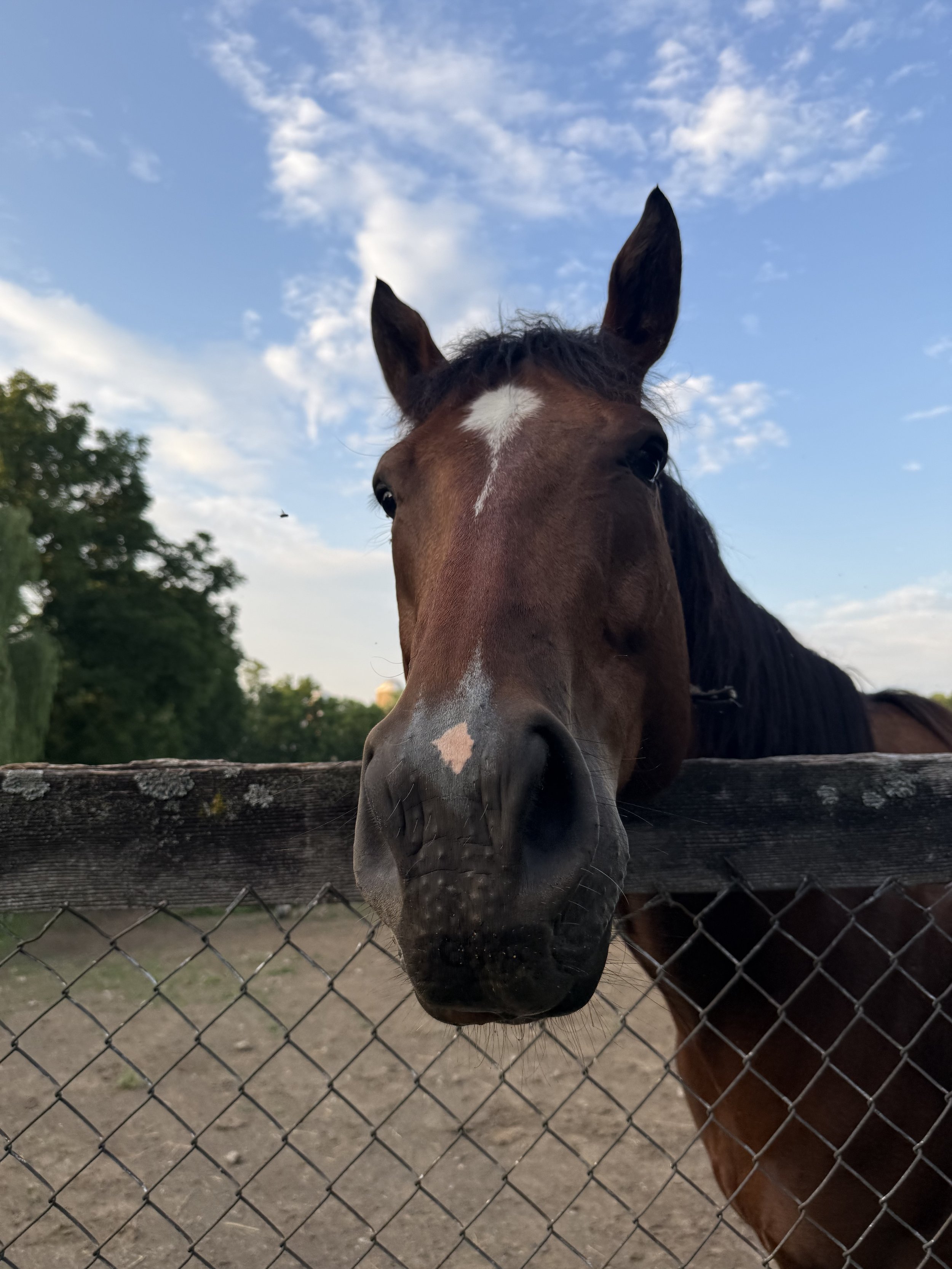
The science helps us understand why Equine-Assisted Psychotherapy is meaningful, but the heart of this work is found in the relationships and experiences that occur alongside the horses.
Some things are best understood by experiencing them.